


Put AI to workacross your business.
Practical AI and Microsoft Copilot solutions designed around your people, processes, data, and business goals.
We help organizations identify, build, and integrate AI that improves knowledge access, accelerates routine work, and supports better decisions. From secure knowledge assistants and document processing to business copilots and AI agents, we focus on implementations that solve real operational problems - not isolated demonstrations.
AI has potential. The challenge is knowing where it creates value.
Artificial intelligence has created significant interest across industries, but many businesses are still uncertain where to begin. Should AI support employees, customers, sales teams, quality departments, or management? A chatbot, an internal copilot, intelligent search, document processing, or workflow automation?
Without a clearly defined business problem, AI initiatives stay disconnected experiments that produce impressive demonstrations and limited operational value.
- Unclear or overly broad AI objectives
- Information scattered across documents and systems
- Difficulty identifying high-value use cases
- Concerns about data access, security, and governance
- AI tools that operate separately from existing workflows
- Limited mechanisms for validating responses
- Uncertainty about cost, adoption, and measurable returns
- No internal ownership after the pilot phase
Not every business needs the same AI solution
Some organizations need an employee knowledge assistant that can search SOPs, manuals, and technical documentation. Others need AI-powered customer service, faster document processing, sales assistance, or a copilot embedded in an internal application. The right starting point depends on:
- The business problem being addressed
- The users who will interact with the solution
- The quality and location of available information
- Required integrations and workflow actions
- Security and access-control requirements
- The impact expected from implementation
Business first. AI second.
We do not begin by selecting a model or a platform. We begin by asking what is slowing the business down, which decisions depend on hard-to-reach information, where teams repeat work, which documents need manual reading and validation, and which questions come up again and again.
From that understanding we define the use case, information architecture, integration approach, validation controls, user experience, and adoption roadmap - so the result becomes part of the business rather than another disconnected tool.
We do not recommend a platform because it is popular. Technology selection follows the use case, the existing landscape, the security requirements, and who will own it long term.
Solutions we build
Most engagements combine more than one of these. Open any to see what it includes.
Move from AI curiosity to a focused implementation roadmap. We help leadership and business teams identify where AI creates practical value across functions, processes, and customer experiences. The typical outcome is a prioritised list of opportunities ranked by value, feasibility, complexity, and readiness.
- Business process discussions
- Department-level opportunity identification
- Data and document readiness review
- Use-case prioritisation
- Risk and dependency assessment
- Proof-of-concept recommendations
- Preliminary solution architecture
- Phased implementation roadmap
Important information sits across PDFs, manuals, SOPs, SharePoint libraries, policies, product documentation, and departmental folders. A knowledge assistant gives authorised users a conversational way to ask questions and retrieve answers from approved sources only.
- Natural-language search across approved sources
- Context-aware, source-based answers
- Role-based information access
- Multilingual interaction and follow-up questions
- Integration with websites, intranets, portals, or Teams
- Usage and feedback analytics
A business copilot supports users while they work - interpreting information, preparing responses, summarising documents, generating drafts, retrieving context, or completing defined business actions inside the systems they already use.
- Sales copilot for inquiry and quotation support
- Service copilot for troubleshooting and response preparation
- HR copilot for policy and employee-process questions
- Procurement copilot for vendor and document review
- Quality copilot for SOP, specification, and inspection guidance
- Management copilot for report summaries and operational insight
Move from answering questions to supporting controlled business actions. Agents can retrieve information, ask for missing details, call an API, start a workflow, route a request, or prepare an action for approval. The objective is governed, traceable assistance inside clear boundaries - not uncontrolled automation.
- Defined tools, connectors, and approved data sources
- Orchestration across topics and specialised agents
- Human approval steps for sensitive actions
- Escalation paths for uncertain cases
- Monitoring, logging, and traceability
- Built on Copilot Studio and Microsoft Foundry where suitable
Conversational solutions that help website visitors, customers, partners, or internal teams get relevant information and complete defined interactions - combining conversational AI with structured workflows so a product question can become an inquiry or service request.
- Product discovery and pre-sales assistance
- Customer support and FAQ handling
- Lead qualification and inquiry capture
- Order and service guidance
- Employee help desk and dealer support
- Delivered on websites, portals, intranets, Teams, or mobile
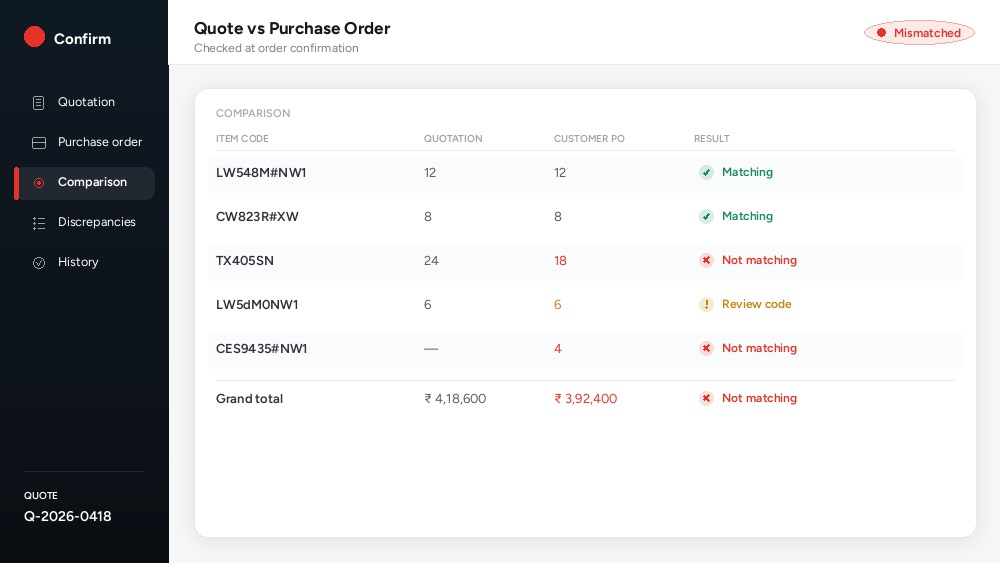
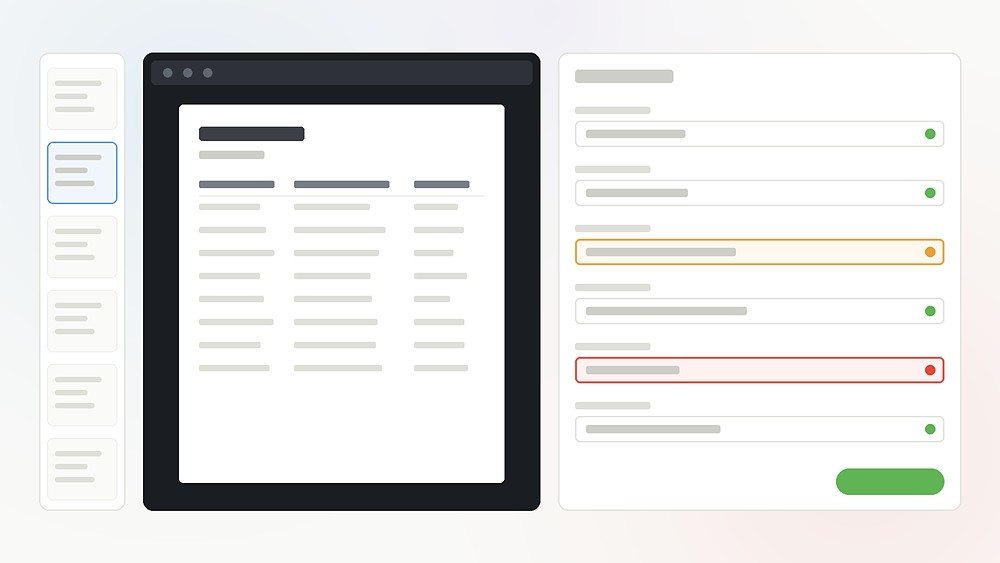
Many processes still depend on people reading, classifying, validating, and re-keying information from documents. Document intelligence extracts, organises, and routes that information - best combined with clear validation rules and human review for high-impact decisions.
- Document classification and data extraction
- Field identification and summarisation
- Validation against business rules
- Exception identification and workflow routing
- Human review and approval steps
- Structured data transfer into other systems
Keyword search fails when users do not know the exact terminology or where a document lives. AI-enabled search understands the meaning behind a question and finds relevant information across structured and unstructured sources.
- Search across policies, SOPs, and manuals
- Product, catalogue, and technical-document search
- Recommended knowledge articles
- Suggested customer responses
- Relevant case or service history
- Similar record and document identification
AI creates more value embedded in the systems people already use. An employee should not always have to open a separate AI tool - often the right experience is an AI feature inside the application where the work is happening.
- Custom web applications and intranets
- Customer and vendor portals
- CRM, sales, and service systems
- Quality and inspection systems
- Document management platforms
- Dashboards and reporting interfaces
AI opportunities across your organization
Select a function to see where AI is most often applied there. Most programmes start with one of these and expand.
- Summarise reports and operational updates
- Surface key risks and exceptions
- Retrieve management information faster
- Support scenario evaluation
- Generate executive-level briefs
Adoption requires trust, control, and accountability
An AI solution should be judged not only on what it can do, but on how it handles uncertainty, sensitive information, access rights, and high-impact actions. Governance should be proportionate: an internal FAQ assistant and a system influencing quality or compliance decisions are not the same risk.
- Defined use-case boundaries
- Role-based access to information
- Approved knowledge sources only
- Response validation mechanisms
- Source visibility where appropriate
- Human review for sensitive actions
- Logging, monitoring, and user feedback
- Content safeguards and clear escalation paths
- Periodic knowledge and model evaluation
Where it creates the most value
AI works best where the context is well understood. In regulated or quality-sensitive environments it should support controlled processes, permissions, traceability, and human review rather than bypass them.
Manufacturing
- Knowledge assistants for manuals and SOPs
- Maintenance and service support
- Quality-document search
- Quotation and sales assistance
- Dealer and distributor support
- Management report summaries
Pharma and chemicals
- SOP and policy knowledge assistants
- COA and quality-document interpretation
- Controlled document search
- Compliance-support knowledge access
- Vendor-document processing
- Internal employee assistance
Electrical, energy, industrial equipment
- Technical product assistants
- Quotation and specification support
- Service troubleshooting
- Project-document search
- Internal engineering knowledge retrieval
Distribution and dealer networks
- Dealer support assistants
- Product and scheme information
- Document and onboarding guidance
- Sales inquiry assistance
- Intelligent portal search
Retail and ecommerce
- Product discovery
- Customer support and sales assistance
- Personalised recommendations
- Order-related guidance
- Customer-query classification
How AI connects to the systems that run your business
Five layers, defined during discovery. The architecture should reflect the business need, existing landscape, security requirements, and long-term ownership model.
8 steps, start to adoption
Discover
Business priorities, pain points, users, processes, and the outcome you expect.
Prioritise
Use cases assessed on business value, feasibility, risk, data readiness, and integration complexity.
Define
Scope, information sources, user journeys, success measures, architecture, and governance.
Prototype
A focused proof of concept validating experience, response quality, and technical approach.
Build
Developed and connected to approved data sources, workflows, applications, and access controls.
Validate
Functionality, response quality, security, performance, edge cases, and user acceptance.
Enable
Released to a controlled group or wider audience with training, documentation, and adoption support.
Improve
Usage, feedback, knowledge quality, and business outcomes reviewed continuously.
What changes once it is live
- Faster access to information
- Reduced repetitive work
- Improved response consistency
- Better customer and employee self-service
- Faster document processing
- Better use of institutional knowledge
- Reduced dependency on a few experts
- More responsive workflows
- Visibility into recurring questions and information gaps
- A scalable foundation for future AI initiatives
- We start with the workflow and business objective, not a predefined AI product
- AI combined with real application engineering, not isolated interfaces
- Microsoft-aligned across Data & AI and Digital & App Innovation
- OpenAI Select Partner in the OpenAI Partner Network
- Experience in environments where approvals, documents, and quality controls matter
- Start with discovery, a proof of concept, a pilot, or a defined requirement
- Ongoing knowledge updates, monitoring, and enhancement after launch
Before you commit to anything
If your question is not here, ask it on a call - we would rather answer it before a proposal than after.
It lets users ask questions in natural language and retrieve answers from approved organizational information - SOPs, manuals, policies, product documentation, and internal knowledge repositories.
A standard chatbot follows predefined conversational paths or answers general questions. A knowledge assistant retrieves and interprets information from selected business sources and gives contextually relevant responses.
Yes, depending on available APIs, database access, security controls, and system architecture. AI can often integrate with ERP, CRM, portals, SharePoint, document systems, and custom applications.
Not necessarily. It depends on where data resides, how it is structured, who should access it, and what the solution needs to do. Existing systems can often remain the source of truth.
It can be designed to access approved internal documents subject to authentication, user permissions, data architecture, and the capabilities of the selected platform. Access is defined carefully during solution design.
A Microsoft platform for building and managing agents that use knowledge, topics, tools, connectors, APIs, and generative AI capabilities.
Microsoft’s unified platform for building, managing, optimising, and governing AI applications and agents using models, tools, connected services, and project-level controls.
Often yes, when the use case, knowledge quality, response expectations, or integration approach needs validating. But a proof of concept should have defined success criteria and a clear path to production.
A focused prototype may take a few weeks. A production implementation can take several months depending on data readiness, integrations, security, user experience, testing, and governance.
No. Generative AI can produce incorrect or incomplete responses. Solutions should be designed with approved knowledge, validation, monitoring, user feedback, clear boundaries, and human review where necessary.
Yes. Multilingual capability depends on the models, required languages, source content, terminology, and quality expectations - and should be tested with real business questions in each language.
Updating knowledge sources, reviewing usage, testing response quality, adjusting prompts or orchestration, monitoring performance, managing access, and adding new workflows or use cases.
Tie it to the selected use case. Measures may include reduced response time, fewer repetitive queries, faster document handling, improved self-service, reduced manual effort, or improved productivity.
AI can assist with analysis, recommendations, classification, and defined actions. High-impact or sensitive decisions should include rules, approvals, human oversight, and governance.
Case studies built on this capability

Ready to identify where AI can create real value?
You do not need to begin with a large transformation programme. Start with one clearly defined business problem, one user group, and one measurable outcome. We will help you evaluate the opportunity, validate the approach, and build a roadmap from pilot to production.