

Root cause investigations,captured once, used everywhere.
How RLT Smart Asset, a reliability and asset-management consultancy, replaced paper-based 5-Why investigations and equipment failure logs with two connected SaaS applications, built on ASP.NET MVC and SQL Server and hosted on Azure.

The situation
RLT Smart Asset advises oil, gas, petrochemical, power and mining operators on asset reliability. Two of their core methods - 5-Why root cause investigations and equipment failure reporting - were still run on paper forms and Excel trackers, filled in differently from site to site.
Nothing stopped an investigation from happening. What was missing was a record that survived past the meeting it was written in: no shared historian, no way to roll failures up into trends like MTBF or a bad-actor list, no consistent way to show a corrective action had actually been closed.
An investigation happened, and then it lived in whichever inbox or folder someone had saved it to.
What we built
We built two connected web applications on ASP.NET MVC and SQL Server, hosted on Azure. A 5-Why investigation tool walks a team through five structured question, answer and evidence steps to a root cause and a latent cause. A Failure Reporting and Analysis tool (FRAT) logs every equipment failure against its unit, tag number, downtime, repair cost and failed component.
Every investigation and every failure record is now the system’s historian, not a side effect of it. The reports RLT’s clients need - common cause, lesson learnt, staff engagement, MTBF, bad actor, cost of unavailability - are built directly from that data instead of being assembled by hand afterward.
Inside the platform
Two tools, one reliability record.
5-Why investigations
- Structured 5-Why walkthrough: question, answer and supporting evidence at each step
- Root cause and latent cause captured on every investigation
- Immediate corrective action and preventive action tracked to a status
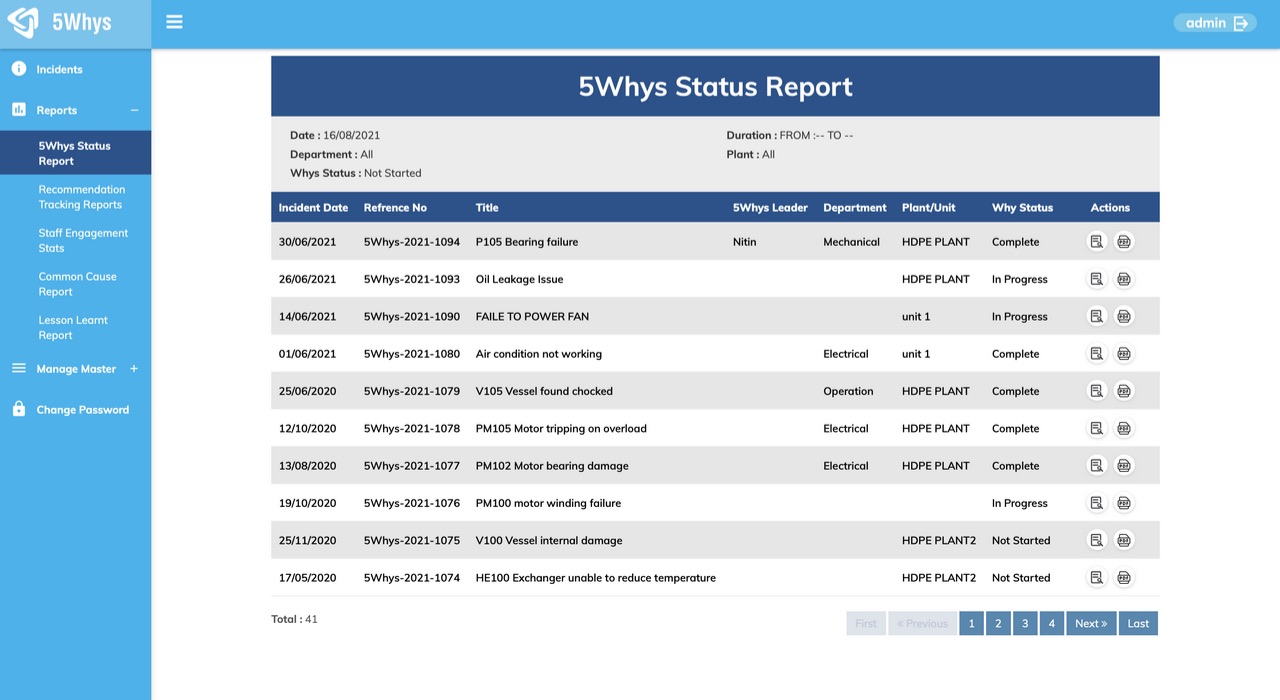
- Common Cause, Lesson Learnt and Staff Engagement reports generated from the same data
Failure Reporting and Analysis (FRAT)
- Failures logged against unit, tag number, downtime and failed component
- Manpower, material and total repair cost captured per failure
- Production loss recorded in value or volume terms
- MTBF, Bad Actor and Cost of Unavailability reports built from the logged data
Platform
- Role-based access for maintenance staff, engineers and asset-management leadership
- Investigation and failure history kept as a permanent, searchable record
- Hosted on Microsoft Azure
What it looks like
Screens from the live application.
What changed
A record that outlives the meeting
Every 5-Why investigation and every failure report is a permanent record in the system, not a document that depends on someone filing it correctly.
Reports build themselves from real data
Common cause, lesson learnt, MTBF, bad actor and cost of unavailability reports are generated from the same records, not assembled by hand afterward.
One historian across sites
Investigations and failures from every plant sit in the same system, so patterns that repeat across sites are visible instead of staying local to one team’s folder.
How it was built
Two role-based web applications sharing the same technology stack, hosted on Azure.
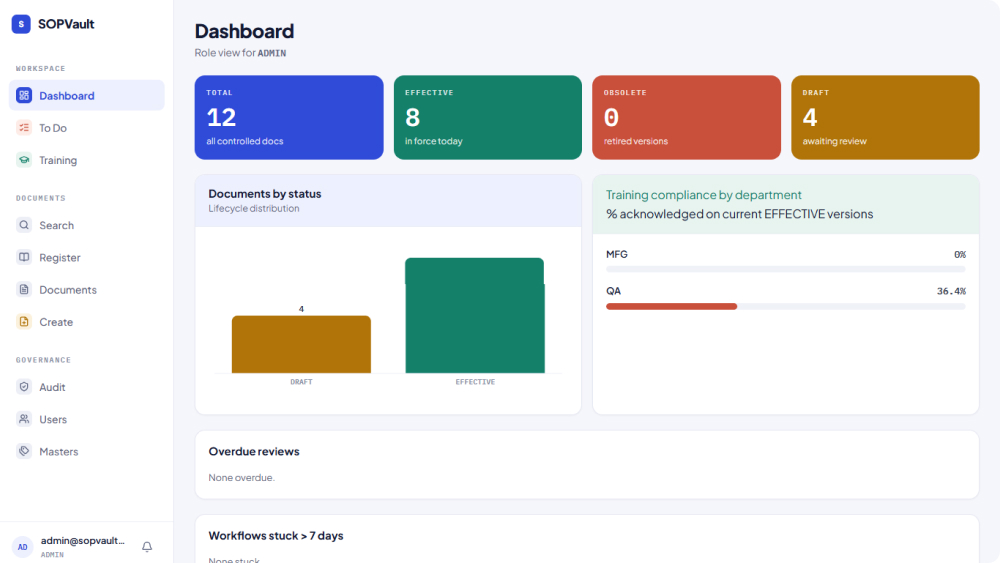
Other systems we have built near this one
Still running root cause investigations on paper or in Excel?
Tell us how an investigation or a failure report moves through your organization today. We will show you what a structured, reportable version of it looks like.