


A credit is only worththe registry behind it.
How a voluntary carbon registry took green projects from listing through validation to issued credits - and then handled what happens next: transfer between accounts, permanent retirement against a footprint, tokenisation, and secure API integration with exchanges including CTX and Zero13.
The situation
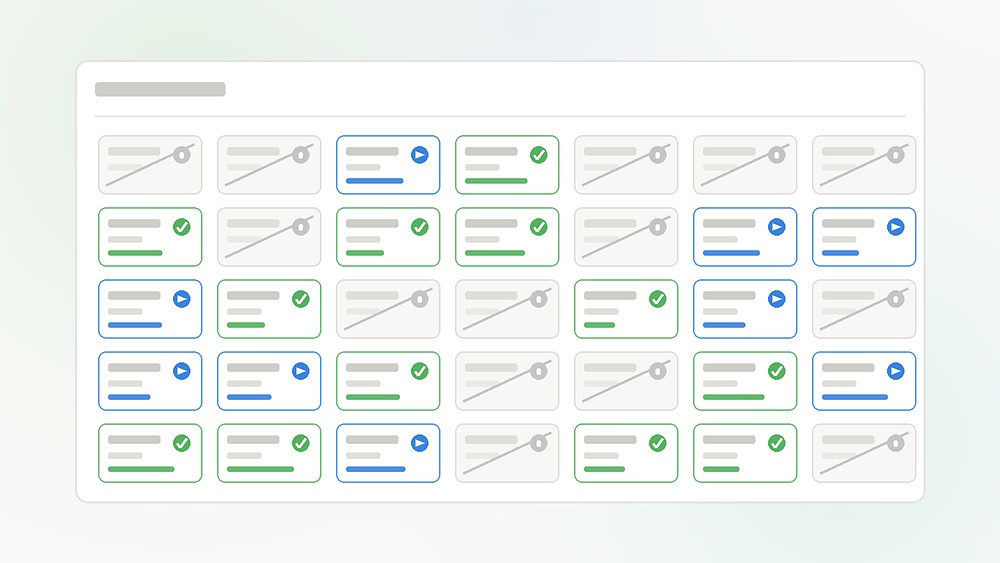
A carbon credit is a claim that somewhere, a tonne of emissions did not happen. Everything giving that claim value sits outside the credit itself: who validated the project, what documentation supported it, whether the credit has already been sold, and whether the buyer retired it or passed it on. Strip the registry away and a credit is a spreadsheet row that somebody could write twice.
That makes the registry the product rather than the paperwork around it. It has to carry a green energy producer from listing a project, through review and validation, to credits issued against that project. It has to hold transfers and retirements without either being reversible by accident. And it has to reach the exchanges where credits actually change hands, over an interface secure enough to carry transactions rather than lookups.
Strip the registry away and a carbon credit is a spreadsheet row that somebody could write twice.
What we built
UCR is a portal covering the full life of a credit. A green energy producer registers, lists a project with its supporting documentation, and submits it for validation. Once reviewed and approved, credits are generated against that project and listed on the registry. From there an account holder can transfer credits to another account, or retire them permanently against their own carbon footprint - which is the transaction that has to be one-way, because a retired credit that could come back would undo the point of having a registry at all.
Beyond the standard registry operations, the platform handles burning and tokenisation, giving a credit a form that can move in markets built around tokens rather than accounts. And because a registry only matters if the market can reach it, secure APIs let external exchanges and other sustainability platforms connect and transact directly - CTX and Zero13 among them. API security was treated as a design constraint rather than a deployment detail, because those endpoints carry transactions, not enquiries.
Inside the registry
The path from a green project to a retired credit, and the market access around it.
Projects and issuance
- Registration for producers, buyers, and verifiers
- Project listing with the documentation validation depends on
- Review and approval before any credit exists
- Credits generated against an approved project, then listed
- Documentation retained against the project that produced them
Holding, moving, and retiring
- Transfer of credits between accounts
- Retirement against a holder’s own carbon footprint
- Burning and tokenisation for token-based markets
- Secure APIs for exchanges and other sustainability portals
- Direct integration with CTX and Zero13
- Security treated as a constraint on every transacting endpoint
What changed
The source document reports no figures for this project, so what follows describes what the registry makes possible rather than claiming a measured result.
A credit carries its provenance
Every credit traces back to the project it was issued against and the documentation that project was approved on. That chain is what a buyer is actually paying for, and it is precisely the thing a spreadsheet cannot supply.
Retirement is final, and it is recorded
Retiring a credit against a footprint is an irreversible, recorded act rather than a note held somewhere. Without that, nothing prevents the same tonne being counted twice except everyone’s good intentions.
The registry is reachable from the market
Secure APIs let exchanges and other sustainability platforms transact directly, so credits move where buyers already are instead of requiring the market to come to the registry.
How it was built
Secure APIs designed to carry transactions rather than lookups, with direct integration into external carbon exchanges.
Other systems we have built near this one
Does your platform have to be trusted by people who never log into it?
Registries, marketplaces, certification bodies, exchanges - anywhere the record you keep is what gives somebody else’s asset its value. Tell us what yours has to be able to prove, and we will tell you honestly what that means for the way it has to be built.